GSA SER Link Lists
Understanding GSA SER Link Lists
In the world of automated search engine optimization, GSA Search Engine Ranker has built a reputation as one of the most aggressive link building tools available. At the core of every successful campaign lies a vital asset that many newcomers overlook: GSA SER link lists. These structured collections of target URLs determine exactly where your backlinks will be placed, which platforms will be used, and ultimately how effective your entire linking strategy becomes. Without a carefully curated list, even the most powerful software is simply firing into the void.
What Exactly Are GSA SER Link Lists?
A GSA SER link list is essentially a formatted file containing web addresses and often platform-specific footprints that the software can read and process. Instead of relying on the built-in search engine scraping alone, which can be slow and unpredictable, users feed these lists directly into the project. The software then follows each URL, identifies the platform type—be it a WordPress blog, a forum profile, an article directory, or a social bookmarking site—and attempts to create an account and post a backlink. The quality, diversity, and freshness of GSA SER link lists often separate chaotic spam campaigns from surprisingly stable, long-lasting tiered link structures.
Types of Link Lists You Must Know
Not all lists are created equal, and understanding the different varieties will save you months of trial and error. The most commonly used categories include verified lists, imported site lists, and footprint-based lists. Each serves a distinct purpose depending on the tier of links you are building and the risk profile of your project.
Verified Link Lists
Verified GSA SER link lists contain URLs that have already been checked for successful registration and posting. These are often exported from previous successful runs and carry a high success rate because the software can skip the initial probing stage. Many advanced users maintain their own private verified lists, meticulously cleaned to exclude dead domains, and organized by platform type. Using verified lists dramatically speeds up the submission process and reduces the load on proxies.
Imported Site Lists
Imported site lists are raw collections of URLs, often scraped from search engines, harvested from competitor backlinks, or assembled from third-party providers. These GSA SER link lists have not been pre-checked, so the software will need to analyze each URL, identify the engine, and attempt registration from scratch. While the initial success rate is lower, imported lists are invaluable for discovering entirely new, unspammed targets and refreshing the pool of domains you are using.
Footprint-Based Target Lists
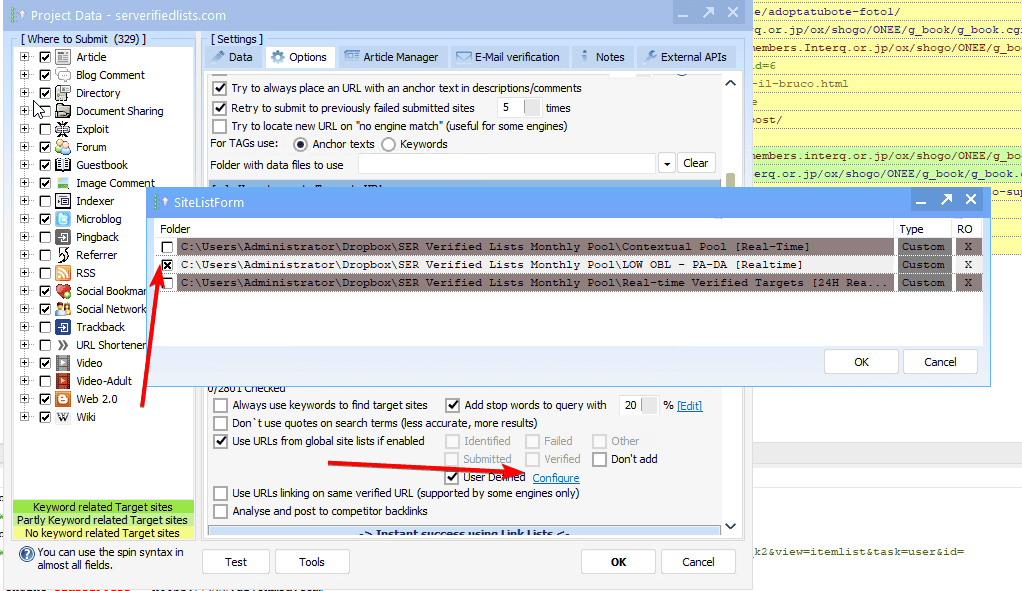
More advanced setups use lists built around specific platform footprints—unique text strings that appear on registration pages of certain content management systems. For instance, a list might contain thousands of URLs that simply link to “/wp-login.php?action=register†or dedicated more info signup pages of known forum software. These GSA SER link lists guide the software’s engine identification process and are brilliant for targeting niche platforms that deliver high-authority contextual links, such as edu forums or niche-specific wikis.
Why Quality GSA SER Link Lists Determine Your Success
The speed and volume of GSA SER can be deceptive. A project running with poorly maintained lists will register on thousands of worthless domains, burn through proxies rapidly, and leave a footprint that invites manual penalties. Conversely, when you feed the software with meticulously cleaned GSA SER link lists, several critical metrics improve at once. Live link rates increase, the average domain authority of backlinks climbs, and the number of toxic 404 or redirect-bound URLs plummets. The result is a link profile that not only avoids filters but can actively boost the ranking of your money site, provided it is used appropriately in the lower tiers.
How to Build and Maintain Your Own Lists
Relying exclusively on publicly shared lists is a short-term tactic. To truly master the tool, you need a consistent workflow for generating and maintaining fresh GSA SER link lists. Start by letting GSA SER’s own search engine queries run in a sandbox project using a broad set of keywords and footprints. After a day of high-volume posting, export all successfully verified URLs and save them into a global site list. Then use a duplicate removal and domain checker tool to strip out dead domains. Sort the lists by platform type, removing any that seem too fragile or over-competitive.
Periodically, you should re-verify your stored lists to prune links that have gone offline. A list that was gold three months ago can be mostly dead today, wasting resources and potentially flooding your campaign with errors. Integrating a robust list of fresh targets every week keeps the machine learning-like aspect of GSA SER healthy, allowing the software to identify and adapt to new platform types.
Common Pitfalls When Using Link Lists
Even seasoned users fall into traps when handling GSA SER link lists. One of the biggest mistakes is using massive, unsorted files containing every URL ever scraped. When the list contains a high ratio of obscure, low-quality directories and auto-approved guestbooks, the link profile becomes dangerously toxic. Another pitfall is ignoring the contextual relevance of the target pages. Blindly blasting links to a mixed list of health forums, gambling sites, and general spam blogs can confuse search engine algorithms and weaken the thematic relevance that modern SEO values.
Over-reliance on third-party “premium†lists without any personal verification is equally risky. Many commercially sold lists are simply concatenations of publicly available scrapes, often including domains that are already deindexed or penalized. Deduplicating, checking for domain status, and running small test campaigns before going full-scale with any new GSA SER link lists will protect your most important projects.
Integrating Link Lists into an Effective Tiered Strategy
Smart practitioners rarely point GSA SER directly at a money site. Instead, they use the software on the lower tiers, where the tolerance for automated link placement is higher. In such a setup, quality GSA SER link lists feed into tier-2 or tier-3 properties. The tier-1 links that point to the main website come from more carefully controlled sources—high-quality manually created web 2.0s, guest posts, or niche edits. GSA SER then powers the secondary links to those tier-1 buffer sites, using the link lists to create a sprawling web of support that reinforces the primary backlinks without leaving an easily traceable automation footprint.
Final Thoughts on GSA SER Link Lists
Anyone who treats GSA SER link lists as a static, one-time download is missing the dynamic nature of automated SEO. The web is constantly evolving; platforms close, domains expire, and algorithms shift. A continuous cycle of scraping, verifying, cleaning, and categorizing transforms these lists from a blunt instrument into a surgical tool. Invest the time in mastering your own list pipeline, and you will find that GSA SER can still perform effectively in an era where most automation tools have been rendered obsolete. The list is not just a file—it is the intelligence layer that directs the brute force, and it deserves the same attention you give to your content and on-page optimization.